

To write a business proposal, start by researching your client’s needs and outlining a clear structure. Include key sections such as an executive summary, problem statement, proposed solution, pricing, and qualifications to demonstrate value and credibility. Ensure your proposal is accurate and visually appealing, and include a signature section at the end to secure the client’s approval.
- A business proposal is a structured document designed to persuade potential clients by addressing their specific needs and offering tailored solutions.
- Essential components include a title page, executive summary, problem statement, solution, pricing, and terms.
- Tailor the proposal to the client’s needs with research, visuals, and clear deliverables.
- Use SignNow for business proposal templates, intuitive customization tools, e-signature capabilities, and secure sharing to streamline the process.
- Avoid common mistakes like vague solutions or unclear pricing to create a compelling and professional proposal.
Introduction
Every great business starts with a solid idea. But how do you turn that idea into a reality? A compelling business proposal is your key to unlocking opportunities, securing potential clients, and winning over investors. It’s the document that outlines your products or services and convinces others to get on board.
This article will guide you through crafting a compelling business proposal to attract investors and win projects. We’ll also explore how modern eSignature tools like SignNow can streamline the process and answer some business proposal FAQs.
What is a business proposal?
A business proposal is a detailed document that describes the products and services your company offers to potential clients. Its purpose is to build connections with potential customers, secure business agreements, and attract investors or partners. Without a proper business proposal, investors are unlikely to take on the risk of a new venture.
Your business proposal should include:
- Your business’s value proposition (what will attract customers).
- A clear explanation of what makes your business different from competitors.
- A description of your proposed solution and how it solves a problem for prospective clients.
What is the purpose of a business proposal?
A professional business proposal helps you lay out a plan for external parties and can also guide your daily operations. Having a business proposal on hand helps you stick to a timeline and work towards your goals in a logical, manageable sequence.
Specifically, it helps an entrepreneur:
- Win new projects.
- Differentiate themselves from competitors.
- Secure funding from viable investors.
- Establish partnerships with vendors, clients, influencers, and more.
Why are business proposals important?
A business proposal can be the deciding factor in winning or losing a client. A well-crafted business proposal can be a key tool that can help you:
- Build confidence: A strong proposal shows prospects you understand their needs and can deliver results, turning them into paying customers.
- Secure revenue: Mastering how to write a persuasive proposal helps you win more projects and generate revenue.
- Expand your business: Ultimately, effective proposals are crucial for business growth and achieving your company’s goals.
On the other hand, a poorly written proposal can send potential clients straight to your competitors. Therefore, it is essential to take the time to craft a well-written and persuasive proposal that captures your potential client’s attention and persuades them to choose you over other competitors.
Types of business proposals
Unsolicited business proposals
As the name implies, an unsolicited proposal is one you send without the recipient asking for it. There are two main types:
- Formally unsolicited: This is a formal document sent to a potential client you haven’t spoken with before. Think of it as a detailed cold email, a formal pitch for funding, or a partnership. The goal is to introduce your business and secure a new opportunity.
- Informally unsolicited: This occurs after a casual conversation in which a potential need was discussed, but no formal request for a proposal was made. For example, after meeting someone at a networking event, you might send them a brief proposal outlining how your services could help them.
Solicited business proposals
A solicited proposal is one requested by a potential client or company. There are two main types:
- Formally solicited: This is when a client formally requests a proposal, often through a document like a Request for Proposal (RFP). For example, a company might send an RFP to multiple advertising agencies to find the best fit for their business.
- Informally solicited: This type of proposal comes from a more casual conversation. For instance, if you meet a potential client at a networking event and they ask you to send them more information about your services, the resulting proposal is informally solicited.
How to write a business proposal: The key elements of business proposals
In this chapter, we’ll focus on how to write a business proposal to make an impact. You never get a second chance to make a first impression on potential investors and business partners, so you should not take the task of writing a business proposal document lightly.
Key elements every effective business proposal should contain:
- Title page
- Executive summary
- Problem statement
- Proposed solution
- Deliverables and timeline
- Pricing and payment terms
- Qualifications and case studies (optional but recommended)
- Terms and conditions
- Acceptance section
Let’s take a closer look at each component with examples.
Title page
A title page introduces you and your business, and it includes the company’s name, the proposal submission date, and the name of the person or company receiving the proposal.
The title page will set the tone for the entire proposal, this is why formatting, layout, and design should be considered.
Executive summary: Unveil your purpose
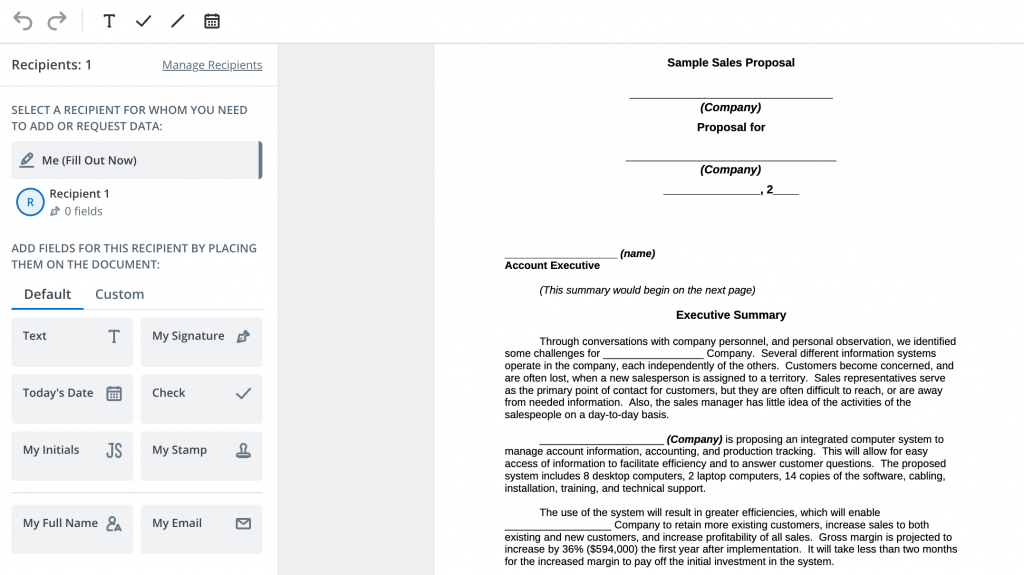
The executive summary should provide a general overview of the proposal’s contents. If the person or company receiving the proposal reads only this section, they should have a clear understanding of what the offer or partnership will entail. Consider including a cover letter to capture your prospective client or partner’s attention and explain why your proposal benefits both parties.
The executive summary should answer the “What’s in it for me?” question for the recipient. It needs to include the relevant details and benefits of the products or services being offered, and how these products/services can potentially solve their problem.
Define the problem or challenge
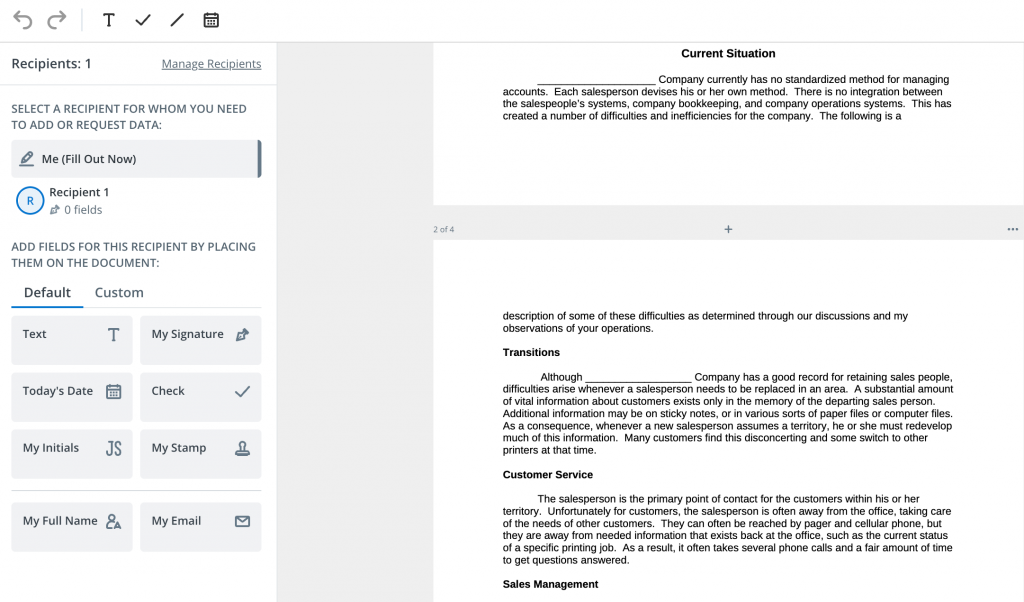
This section should provide more detail on the existing problem affecting the potential client.
If the proposal is meant to secure funding, this section should include a summary of the market challenge and how your product or service will address it.
This section is an opportunity for you to demonstrate that you understand the industry’s landscape and have proposed solutions that meet the needs of the intended audience.
Present the winning solution
If a business proposal had a money shot, this would be it.
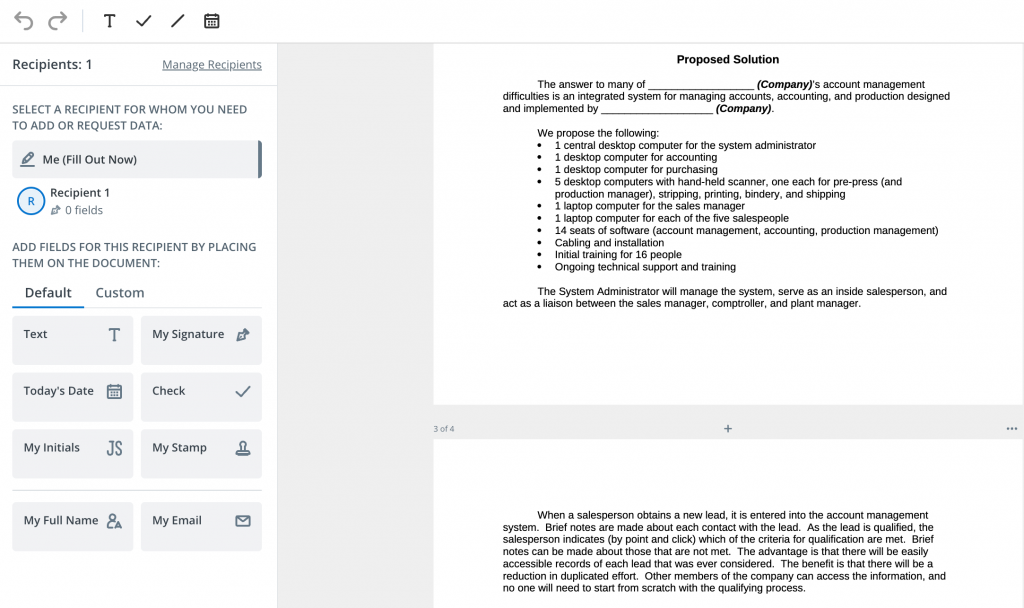
This is your chance to make their product or service shine. Describe the solution in detail and how it will impact the person receiving the proposal.
This section should be customized for each recipient and tailored to their specific needs. If the proposal is going to an investor, it should be clear how that investor will profit from their commitment to the business. If the recipient is a potential vendor, this section should detail the partnership, including the project scope, relevant deliverables, and timelines, so be specific and detailed.
Showcase qualifications and proof of concept
A proof of concept can be an incredibly influential selling point. In this section, you should walk the walk instead of just talking about the impact you can make. In other words, explain how you will bring about results.
If the product or service has undergone beta testing, detail the results. If you have already assembled a team, introduce each team member, list their qualifications, and showcase how they will work with the recipient. If funding or important partnerships have already been secured, highlight those relationships.
Transparent pricing
Recipients of a business proposal want to collect as much information as possible before making a decision to invest, collaborate, or walk away. The business proposal is the best opportunity to lay all the cards out on the table and set realistic expectations.
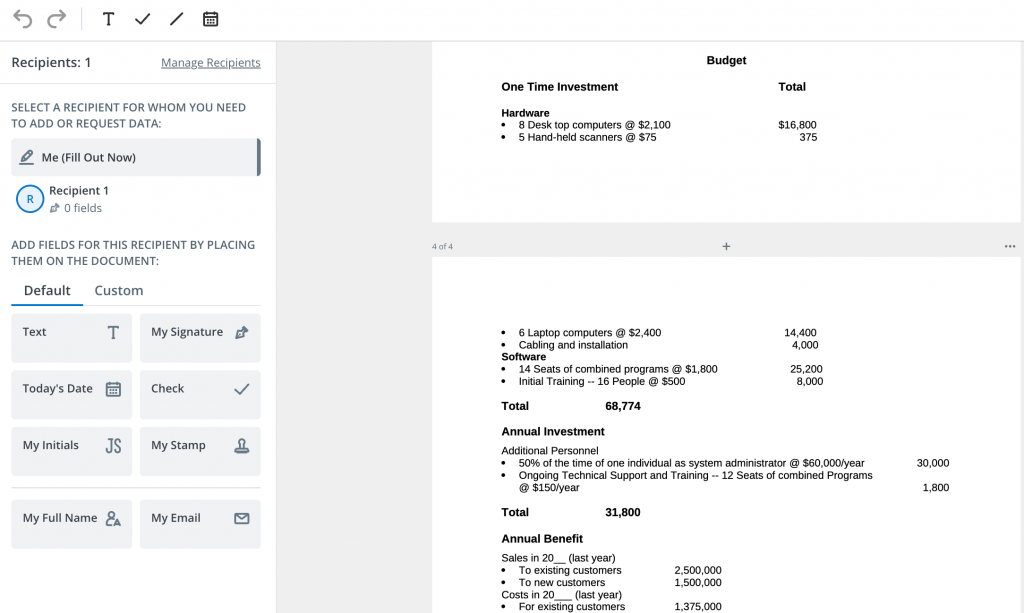
This section should contain a pricing table highlighting the cost of the proposed services or products. With formally solicited proposals, it’s easier to give specific and accurate pricing since the solicitor will often include parameters such as budget constraints. When sending unsolicited proposals, it might be better to include more general information with the caveat that specifics will be provided once conversations continue.
Compelling conclusion
At the end of a business proposal, provide an executive summary of your offer and make one last case for yourself. In this section, the proposal should reiterate the customer’s problem and how you will address their needs.
If the proposal serves as an initial agreement or contract, this is where a signature page would go.
SignNow business proposal templates
When it comes to conducting new business or negotiating contracts, everything is now done digitally with e-signatures.
This is why it is incredibly important to choose a trustworthy and reliable digital partner. Especially with something as sensitive as new business contracts, both business owners and clients, partners, and investors need to feel comfortable and secure signing a digital document.
SignNow is trusted by millions of users worldwide to deliver secure, legally-binding eSignatures. For entrepreneurs who are just getting their ventures off the ground, SignNow offers a range of templates, where you can find some business proposal examples and other ready-to-use document samples. With an intuitive editor, you can easily customize pre-designed templates, electronically sign them, and send them to your prospective clients. These resources are designed to simplify and streamline the process, helping you make creating polished, professional business proposals a breeze, so you can focus more on the content and less on the format.
To upload a business template, click +Create > Document > Add from Forms Library, as shown in the screenshot below. If you have your own template, you can add one from your device or cloud storage.
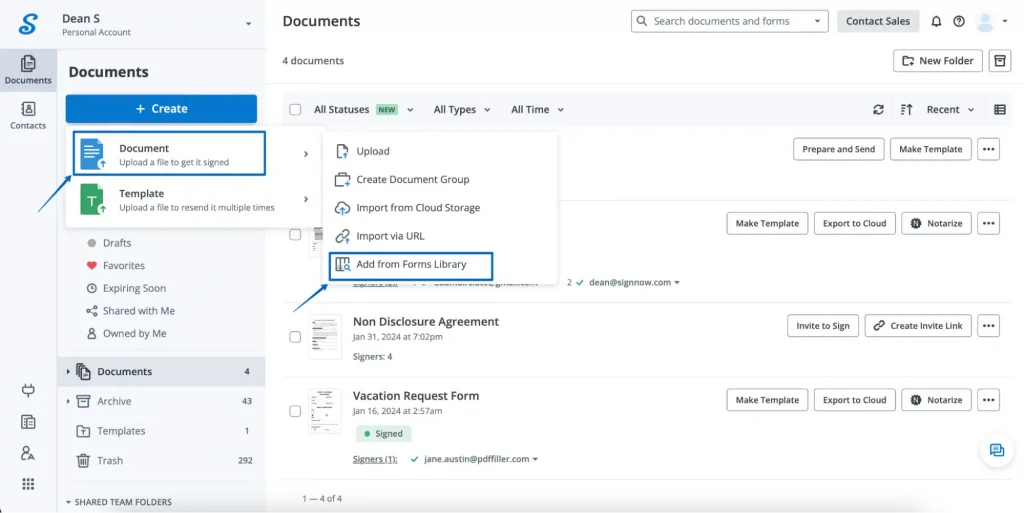
After that, you can switch to the Me (Fill Out Now) tab on the left to fill out your business proposal template with your custom information, such as company name and contact details, budget numbers, etc. Then, finalize the document and send it to your new clients via email right from the platform.
Investors business proposals vs. funding business proposals
It’s critical to understand the difference when you write a business proposal for funding and investors.
A formal business proposal for funding is typically used to obtain funding for a specific project or initiative, and it is often submitted to government agencies or private donors. On the other hand, an investor proposal is designed to attract investment from banks, venture capitalists, or other potential investors.
The main differences between an investment proposal and a business plan are purpose and audience. A business plan considers what the business is selling and why, while an investment proposal focuses on the customer value proposition, the business scalability, the strategic capabilities, the competitive advantage, and its sustainability – all the aspects that will generate and maintain a return on investment.
The ROI component of a business proposal for investors is critical. Investors like to take risks and gamble on new companies – that’s the whole reason they are in the game – but they always want to have a clear understanding of what’s in it for them. How will their risk pay off? How will they benefit if the company is successful? A path to ROI can be the most compelling way to persuade an investor to sign a business proposal.
Business proposal for investors
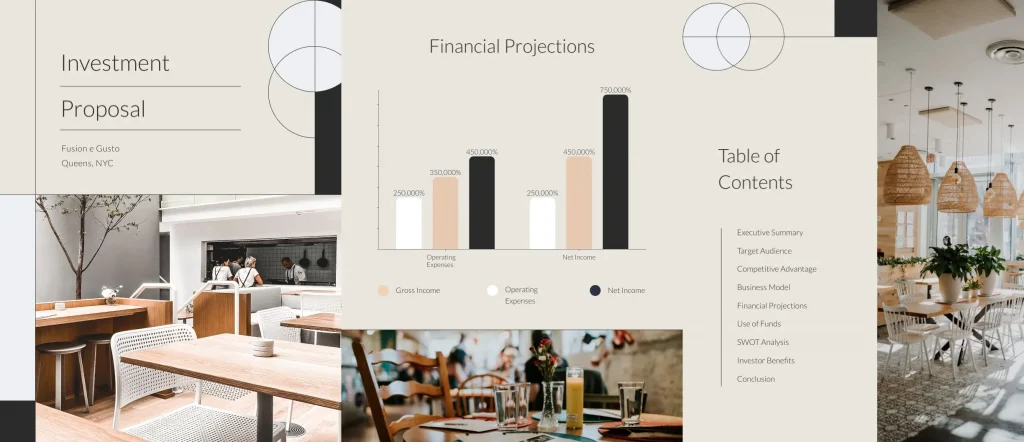
In this business proposal example, a restaurant owner is seeking investors for a new concept in New York. “Investment Proposal” is written prominently on the cover page, immediately indicating the plan’s purpose to the recipient.
In addition to detailed information about the restaurant and how it would be different from others in the area, there is a financial projections section that lets the potential investor know what kind of earnings they can expect should they decide to take a chance on this establishment.
Business proposal for funding
A common way that businesses seek funding from government agencies is through applying for grants. You may want this kind of funding for a specific project or initiative, as opposed to needing funding for an entire business.
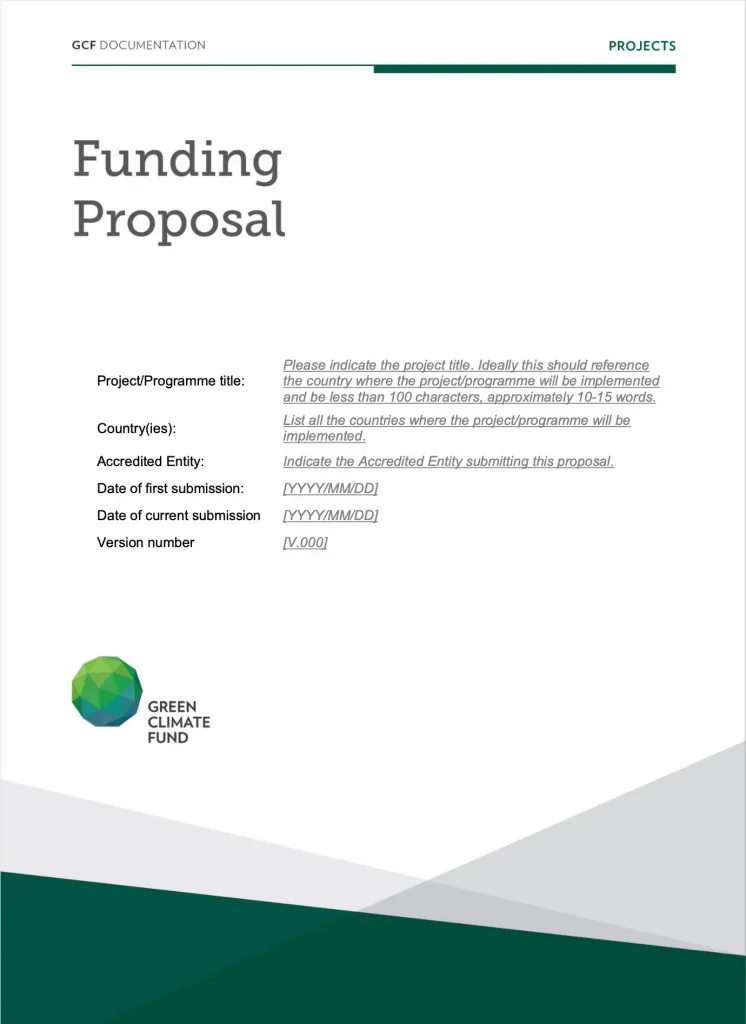
The above business proposal example is specific to the Green Climate Fund and one particular project. The proposal details financing information, expected performance, a risk assessment, and more.
Best practices for creating business proposals
Writing an effective business proposal can be time-intensive and a bit overwhelming, as the stakes are high. You should remember the following best practices when crafting a great business proposal:
- Create a detailed outline: Starting with an outline helps to keep things organized and on topic
- Use relevant data: Investors, clients, and partners—give specifics—they want proof and numbers so they can make the most well-informed decision possible. Using specific data helps create a persuasive business proposal.
- Add visuals to reinforce the message: It can be hard to read long blocks of text and truly digest the information presented; using images and graphics is not only visually appealing but can also help deliver a message in a more impactful way.
- Use a trusted e-signature partner like SignNow: Anyone signing a proposal electronically wants to ensure that their data is safe, secure, and protected—SignNow adheres to strict industry standards and is easy to use
- Conduct thorough research: When extensive research is done, it shows in the work produced; investors and partners can tell when someone knows what they’re talking about and is as invested in their own product as they’d like someone else to be
- Proofread meticulously: Grammar and spelling mistakes are sloppy; we are all human, so it’s normal for one or two things to fall through the cracks, but proofreading a proposal more than once is critical in catching unwanted errors
- Be clear and straightforward: Business proposals are not the time for fluff; instead, being direct, informative, and honest can go a long way in building a trustworthy relationship.
Common mistakes to avoid
When crafting a business proposal, it is crucial to avoid common pitfalls that can undermine its effectiveness. Even a well-intentioned proposal can fall flat if it fails to address these issues. Below are several mistakes to watch out for:
- Vague problem statements: Clearly define the problem or need you aim to solve; a lack of specificity can confuse your audience.
- Lack of visuals: Incorporating charts, diagrams, or images can enhance clarity and make your proposal more engaging.
- Unclear pricing structure: Ambiguous or overly complex pricing can deter potential clients and lead to mistrust.
- Overloading with unnecessary information: Too much irrelevant detail can distract from your core message and overwhelm the reader.
- Ignoring the target audience’s needs: Failing to tailor the proposal to the client reduces its relevance and impact.
Conclusion: Craft a winning business proposal
Business proposals are essential for entrepreneurs launching new ideas or growing and scaling their current businesses. Proposals are used to attract investors, funding, clients, partners, and more, and they offer an opportunity to make an impression on the market.
Without a well-executed business proposal, it is nearly impossible for your business to succeed.
All business proposals must clearly demonstrate your business’s value proposition, how you are different from your competitors, and how you will address a market need.
Create business proposals that shine, close deals faster, and obtain secure e-signatures by partnering with a trusted electronic signature vendor like SignNow. Sign up for a free 7-day trial today.
FAQ
1. What is the difference between a business proposal and a business plan?
A business plan outlines your company’s long-term vision and operational strategy, serving as an internal roadmap for growth. In contrast, a business proposal is a sales document sent to a specific client to offer your products or services and persuade them to work with you. While a business plan details your entire business, a proposal focuses on solving a particular client’s problem.
2. How long should a business proposal be?
The ideal length of a business proposal depends on the project’s complexity and the client’s needs. Shorter proposals are often more effective, as they are direct and easier for busy clients to review. As a general rule, aim for clarity and conciseness, providing enough detail to be persuasive without overwhelming the reader.
3. What are the key elements of a winning business proposal?
A winning proposal should include an executive summary, a clear statement of the client’s problem, your proposed solution, and detailed pricing information. It’s also crucial to include your qualifications, a project timeline, and clear terms and conditions. These elements work together to build trust and demonstrate your value to the potential client.
4. How do I price my services in a proposal?
To price your services effectively, first calculate your costs, including labor and materials. Then, conduct market research to see what your competitors are charging and ensure your pricing is competitive. Present your pricing clearly in a breakdown, so the client understands exactly what they are paying for, and consider offering a few tiers or options to provide flexibility and appeal to different budgets.
5. Can I use templates for business proposals?
Yes, using templates can save time and ensure you include all necessary sections in your proposal. However, you should always customize the template to address the specific client’s needs and reflect your unique brand identity. A personalized proposal shows the client you’ve done your research and are genuinely interested in solving their problem.
- Introduction
- What is a business proposal?
- Types of business proposals
- How to write a business proposal: The key elements of business proposals
- SignNow business proposal templates
- Investors business proposals vs. funding business proposals
- Best practices for creating business proposals
- Conclusion: Craft a winning business proposal
- FAQ